a poem: buzzed

(written while in Korea, a few weeks before the anxiety set in)

The buzz of the computer screen is my only comfort when i’m feeling emotional
is it poetry? or prose? or just the ramblings of a lost little white girl alone at her computer, lit up by the dim screen, her eyes slowly degenerating
because she won’t wear her glasses, picking at her face because it is a small punishment for the pizza she ate instead of working out, listening to
classical music because something in her soul is begging for the old days when things made sense and were longer. lasted longer. now our
collective attention span is about three minutes. but tomorrow she will wear black eyeshadow and think about bukowski and spit at the world,
but smile at her students because it’s her damn job and she’s too afraid to be jobless.

-a.e

Being an Extroverted Introvert; or INFJ Struggles

I’m a secret introvert. Actually, I’m not, since I tell everyone I’m an introvert within a few hours of knowing me so they don’t get offended when I cancel plans. Also so I have an excuse for the many hours I spend at home. Unapologetically.

But people who don’t know me well enough to get the speech are usually surprised when I do tell them. They’d guess I was an extrovert if they thought about it at all. They see me as the cheery person who always has a bright smile when she says good morning, and can small talk with ease, and loves to laugh and can’t get through a conversation without making everything funny. Oh, and the one who isn’t chuffed about speaking in front of people. MC the Spelling Bee? No problem. Give a presentation later about the Wax Museum? Sure. Lead Summer Camp and head up all the meetings? Of course!

The truth is, I’m a very serious introvert. I need a lot of downtime. I need a lot of heads-up if we’re going to go out and do something. Or if you’re going to call me on a phone. (Please text.) I need to psych myself up to go outside and take the trash out. I love lying in bed all day. All those introvert things.

I guess I can explain it by telling you I’m an INFJ, a social chameleon and adaptor. I take on the personality of the people I’m with. With reserved people, I’m self-controlled. With organized, business-like types, I’m efficient and logical. With upbeat, fun-loving people, I’m loud and silly. I used to feel weird, like I was losing myself in the process. But I consider this a strength. I can relate to people due to my empathy by mirroring them. It’s totally unconscious, but it does mean that I’m generally liked by most people. (This has been told to me by many other people I’ve worked with/known, so I trust this is true.)

But… (there’s always a but)

Sometimes it pulls me in different directions. Sometimes I really do want to go out but I’ve already been out so I can’t go out. I’m like the eternal cat, never knowing whether it wants to be in or out, meowing loudly in existential pain because the OTHER side is always better.

Oh well. The fact that I can speak in public without fear is something I’m not going to question or take for granted. Thank you, exhibitionist genes.

Now let me out. No, wait, I want to go back in. No, wait…

Signature

Hello, I have Panic Disorder: Beginning a journey of healing

Stripes

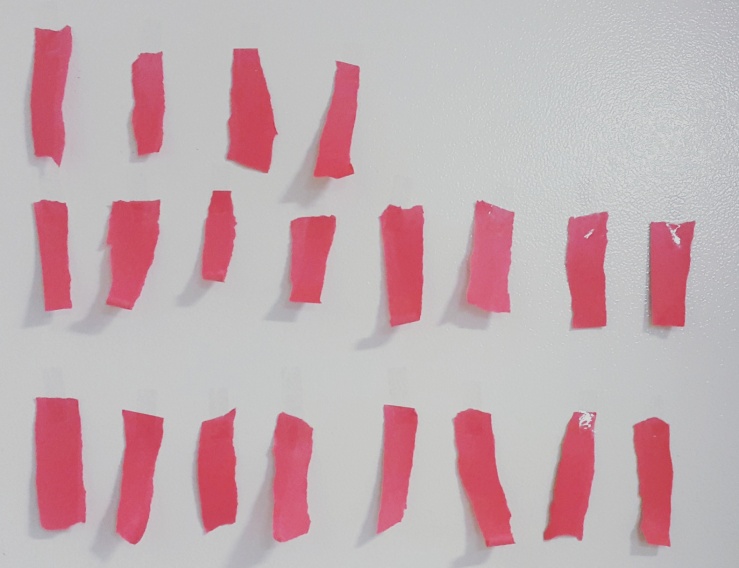
(Caption from Instagram) Goodbye Korea! I didn’t think it would be like this. Twenty stripes. Twenty panic attacks in six weeks. That works out to an attack almost every other day. Some days were fine. Some were so, so bad. .

Mental health is never easy to talk about. Never easy to admit to having trouble with. I don’t know what caused it. Maybe it was something that built up over a long period of time. Maybe there was some unknown trigger that started it all. The doctors couldn’t say for sure. Maybe I’ll never know. .

Panic attacks. Anxiety disorder. Insomnia. Paranoia. Claustrophobia. Agoraphobia. In the past few months I’ve run the gamut. I’m not proud of it, but I’m not ashamed either. It happens. People get sick. I’m lucky I can go back home to heal. I’m sad to leave Korea in this state, when it’s unavoidable, but I will be bringing with me many happy memories.
Thank you to everyone I met, everyone who impacted my life. I’m grateful for the lessons learned, the experiences, the good times and the bad. I’m living, I’m growing, I will get better.
Here’s to you, Korea, and here’s to me, and a brighter future!

It’s funny that the last post I had up on here was on October 10th, the day my life went all to pieces. I think I had it scheduled because what happened at 3am that day would not have let me post it in any kind of frame of mind.

Let me back up.

On October 10th, at 3am, I woke up having my third panic attack in my life. It had been nearly four years, so I’d forgotten what it felt like. And because panic attacks make you PANIC, I thought I was having a heart attack. I was convinced if I didn’t get medical attention at once I would die.

So I went to the ER. Nothing showed up on the EKG or any other tests, and by then the panic had subsided and I figured I must have had some kind of attack. I was given some medicine and told to see a psychiatrist. O-kay.

I didn’t go to work that day. I went the next day, had a panic attack that night. Had one the next night, and then three over the weekend. Cut to December 22nd, the day I came home, and that number had reached 20. Twenty panic attacks in just over two months. Not a fun time. Especially as I decided to work through the end of the semester.

I got on medication about a month before I left, which helped, but also didn’t help in learning that addiction to those medications and coming off of them can be just as terrifying as going through life with the attacks.

I don’t like talking about my mental health. I don’t like admitting I have a problem I can’t handle. I made the above post on Instagram and it was one of the hardest things I’ve ever done to post something like that so publicly.

But I think I was also really brave to do it. Mental health still gets a bad rap. People on feel-good medication are still treated like they’re just not trying hard enough. I bought into that until I dealt with depression in my teens and early twenties, and even then the measures I took were by half. So my anxiety ripened and got worse.

Here’s the thing though. I’m INCREDIBLY grateful this happened. Like, so, so glad. I was in a position I didn’t like, doing work I didn’t feel committed to, living in a way that didn’t let me pursue what I wanted. I had a lot of pent-up emotions and anger that had never been expressed. But I wasn’t doing anything about it. I was too scared/lazy to change jobs or move anywhere else and was seriously just going to stay at the same job for another few years. Exactly the trap I had been so adamant about not falling into.

Repressing things makes my body not well. Eating poorly and not exercising makes my body not well. Internalizing the negativity of the culture around me makes my body not well. Having no boundaries with my self or others makes my body not well. I didn’t listen until I had to. So I’m glad it happened.

Yes, I’ve had to move back into my parents’ house and start a process of healing. I’m going to have to go to *gasp* therapy and figure out what’s causing all this crap. I’m going to have to admit this to you all, which is very, very hard.

But so is dealing with agoraphobia, insomnia, claustrophobia, panic attacks, and anxiety of many kinds.

That’s why I have been offline since, well, the Day.

But I’m happy. Happier than I have been in a long time. I’m home, I get a chance to get better, really get better, and I can have some downtime.

I’m sharing my journey to recovery because while I was waiting to come home, I read a lot about anxiety, and hearing people’s stories was encouraging. I hope mine will end well, and I hope it will help anyone it can.

I’m building my own ladder, one rung at a time, celebrating the small victories and eating all the Mexican food I can (verified therapy food, right?).

Signature

Living as an HSP Expat

Do you live in a country other than your native land? Do you wish you could, but feel that your sensitivity might hold you back or make the whole experience traumatic? Being an HSP and living abroad does present some unique challenges, but it is also an amazing and totally worthwhile adventure even for us sensitive types! Before I delve into that, I want to take a moment to elaborate on something Elaine Aron says in her book about Highly Sensitive Persons;

The Brain’s Two Systems

One system, the “behavioral activation” system is hooked up to parts of the brain that take in messages from the senses and send out orders to the limbs to get moving. This system [moves] us toward things, especially new ones. When the activation system is operating, we are curious, bold, and impulsive. The other system is called the “behavioral inhibition” system. This system is said to move us away from things… It makes us alert, cautious, and watchful for signs. …This system is hooked up to all parts of the brain…noted to be more active in “inhibited” children.

(My note; Aron gives the inhibition system a new name; the pause-to-check system, and notes that though this system seems stereotypically undesirable, it is vital for survival and that everyone has this. HSPs merely have a more sensitive inhibition system.)

Some [HSPS] might have only an average-strength pause-to-check system but an activation system that is even weaker. This kind of HSP might be very calm, quiet, and content with a simple life.

Another kind of HSP could potentially have an even stronger pause-to-check system but an activation system that is also very strong – just not quite as strong. This kind of HSP would be both curious and very cautious, bold yet anxious, easily bored yet easily overaroused. The optimal level of arousal is a narrow range. (My note; Arousal here meaning stimulation to the nervous system by sounds, sights, social interaction, work, stressors, etc.) One could say there is a constant power struggle between the advisor (pause-to-check) and the impulsive, expansive warrior within the person.”

Aron goes on to ask a series of questions; “What type are you? Is it easy for you to be content with a quiet life? Or are the two branches that govern you in constant conflict? That is, do you always want to be trying new things even if you know that afterward you will be exhausted?”*

I’m this way. I love novelty. I desire to get out there and see new things; experience life. That’s why I love to travel. But there’s always been this tension within me, and I realized after reading Aron’s book that it was because I had both a strong activator and a strong inhibitor. I was always bold yet anxious.

I’ve moved abroad twice in my life (talk about bold), once with a friend and once alone. But it was challenging when literally everything around me was stimulating to my nervous system. I couldn’t rest my eyes or ears anywhere around me. There was nothing familiar or safe.

As an HSP, how did I handle that? I’m going to share with you some tips if you’re an HSP looking to travel long-term or move abroad. It may not work for you, as each HSP is unique, but hopefully, these ideas will put you on a path to adjusting well wherever you go.

Research the Country

I did a huge amount of research about Taiwan and Korea prior to moving. I read books about the culture, language, stories, blogs from other teachers who lived and worked there and watched documentaries and Youtube videos. (Eatyourkimchi is the best for Korea and, more recently, Japan.) I even looked up the area I’d be moving to in Google Earth and virtually walked around the neighborhoods. It was incredible! But more than the fun factor, seeing it – the differences in building types, car designs, road layouts – helped me acclimate before I ever moved. Sure, it’s wonderful and exciting to see how different cultures live, but as an HSP, you have to adjust slowly or the shock could be devastating.

Keep a Low Profile at Work

My first semester at school I hardly spoke up. I wasn’t a total newbie at teaching, but I was new at my work, new to the culture, new to the team, new to everything. My ideas wouldn’t have fit at the time.

I listened at meetings. I listened to the other teachers, to their problems and solutions, their ideas and complaints, and absorbed it all quietly. Only after my first few months did I start offering my own suggestions, and by then I’d built enough of a reputation as being reliable and efficient that people listened to me. This advice is good for anyone entering a new workplace, but it was essential to me as an HSP. I couldn’t have handled taking on the extra responsibilities I have now. I lead committees, head events, organize camps, and do a whole host of other jobs besides teaching. My first semester, as a new teacher and new expat, I needed to survive. And that meant doing only what I could handle at work. I don’t like to advocate the bare minimum, but it’s hard enough adjusting to a move overseas and a new job even for extroverts. Hang back at first while you get your bearings, and then start to be more adventurous.

Practice Intense Self-Care

I qualify self-care here because when I think of self-care, I tend to think of bubble baths and pedicures and those small, luxurious, unnecessary to survival but fun things that adults do. For HSPs, those things are nice, but often what we need is something more. We need quiet, dark places to rest. We need a home that feels welcoming and safe to return to every day. Some of us need our books or art or whatever it is we love around us.

The first weeks in a new country are the hardest. You’re adjusting to it all, and everything that should be easy is new and scary. Grocery shopping, figuring out bills and trash, getting a phone and internet; it’s all different, and if there’s a language barrier, even harder to access.

If you know what to expect, even if what you can expect is tough, it helps. Try to build familiarity with your area as soon as you can, which will mean pushing yourself out of your comfort zones for a while. You need to pound the streets, getting used to the sights and smells and sounds of the place. My grocery store down the road feels safe now because it’s familiar. Same with the local cafe and convenience store. There might be better ones just as close, but since those are where I went during my first months, they’ve stayed in my zone. Small things are also a huge help when you’re adjusting. Find a drink from home, or a drink or snack you love that you can return to again and again to get that feeling of familiarity.

Find Your Tribe

After you settle in and have found some safe places, find a tribe. It might take longer to do this, but that’s natural.

For me, this was D&D. I had never actually played in the US, but the people I met in Korea were like me; nerdy, introverted, witty. For you, it might be joining a writing club, or a jogging or photography club. One guy I know goes to soccer games every weekend and volunteer coaches. Another friend volunteers at homes for orphans and with North Korean refugees. Find a church, a club, a gym, something you can go to to find like-minded people. Even for introverts, it’s nice to have somewhere and someone to help you feel integrated into the new world.

Make a House (or Apartment) a Home

If you don’t intend to live overseas forever, it can be hard to make your latest abode feel like yours. Especially in Asian countries, the apartments provided by the schools tend to be small. Really small if you’re single. When I first moved into my new place, I felt like I had reverted to a dorm. It was much smaller than my old apartment. We’re talking one room, kitchenette type. I resisted putting anything on the walls for ages. I just couldn’t make myself do it. I knew I wouldn’t stay in that place, even if I did stay in Korea. But after a year, I decided to try and decorate.

It really does make a difference. Adding in my own touches makes my small apartment feel more welcoming, and more like me. I look around and see things I like. I see my imprint, which makes it more comforting.

There are tons of ways you can spruce up a tiny living space, even on a budget. Pinterest, of course, has millions of ideas. My solutions? Paper flowers, printed quotes, floral themed kitchen supplies, cute mugs, and a really pretty wall calendar. Simple, small touches.

Connect With Other HSPs

It was important for me not to feel too weird and out there as an HSP. I’m sure some of my friends are, but I had no one who identified as one besides me until I went online.

This is more general advice for HSPs than for expats specifically, but it’s doubly important when you need comfort overseas. Finding other HSPs helps in many ways. If you’re new to the idea, knowing how many others like you are out there helps the disingenuous feelings that sometimes come when you discover something new about yourself.

It’s also nice to reach out and say, “Help!” when you’re not sure what’s going on and connect to someone who’s gone through something similar.

Fandoms are also a nice way to stay involved with people who share your interests. They might not all be HSPs, but being able to geek out together is precious. 🙂

Are you an HSP living overseas? Was it easy or difficult to get adjusted? I look forward to hearing from you!

*P.S. If you think you are an HSP, or you might know one, I encourage you to read Elaine Aron’s book The Highly Sensitive Person. Reading this passage without the background and further information might give it a false connotation.

Hello, I’m a Multipotentialite: Discovery Series

I am a Multipotentialite, MP for short (Military Police, Member of Parliament, Multipotentialite, all basically the same thing…).

I was going to start off this post talking again about how uncomfortable I am adding all these labels to myself, as if trying to apologize for my uniqueness. As if trying to explain away the part where I’m justifying all my odd behavior.

That’s a terrible thing to do, especially when part of the purpose of the discovery is becoming MORE comfortable with me.

Here we go then.

What is an MP? This is the simple definition given by MP hero, Emilie Wapnick, on her site Puttylike.

A multipotentialite is someone with many interests and creative pursuits.

(If you want to read more or think you are one, head to her website. Seriously, I could spend hours there.) 

An MP has many interests, and those can be far ranging and disparate. They don’t have to match or verge on any scale.

There are different kinds of MPs. Some pursue one passion for a while, then completely switch to another, while some pursue many at the same time and some switch between these two paths.

I learned I was an MP when I heard Emilie’s TED talk. It was serendipitous. I wasn’t looking for it. In fact, I think I was so bored I resorted to TED to pass the time. But when I heard her describe Multipotentiality, my brain sat up and took notice. Yes! I cried. Yes YES! This is me!

All my life I have felt like there was something fundamentally wrong with me. Something ingrained in me that was just…off. I could never settle on any one passion or hobby. When I was young, I was very artistic and hands-on. I did knitting, jewelry-making, needlepoint, quilting, doll-making, woodworking, and any other kind of handiwork. I basically lived at Hobby Lobby.

As I got older, my interests expanded to be more academic as well as artistic; I got into 2D mediums like drawing, started reading about science, linguistics, history, politics, and scoured every shelf of the nonfiction section in my library.

From there, it has continued to expand. Self-help, comic art, philosophy, feminism, spirituality, herbalism, holistic living, Asian culture, team building, the psychology of creativity, dream meanings, and so on.

Right now, I would put my biggest passions as writing, blogging, self-discovery, and multipotentiality itself (exploring what it means).

That’s a huge list. You can see how frustrating it was to bounce back and forth and think each new “thing” was “the thing” that I was meant to do with the rest of my life. I kept thinking I needed to settle down and find my “soulmate” of a career. Never mind that I never believed in romantic soulmates either…

When I never could settle, when my passion inevitably wavered after a month or six months, I felt like an utter failure. A short period of bluesy depression would fall upon me. Until the next passion hit, and I was off again, convinced that I had finally found it. And thus, the cycle would repeat. I thought I was a flake. I thought I lacked grit. I thought it was just laziness.

Now I know it’s not. Now I know that in reality, I’ve been embracing and living out my life as a multipotentialite. A scanner. A renaissance woman. I learn what I need to, and I move on. I enjoy this life. It’s not like having all these interests has ever stressed me out. On the contrary, I love that I can talk about raising horses, WWII politics, quantum theory, language families, and whatever else. It makes life a heck of a lot more interesting.

I could never thank Emilie enough for opening my eyes. It has given me new direction in life as I try to understand how to leverage my strengths and varying passions for a new kind of career. It has also given me comfort. I don’t hate myself every time my interest in something wanes. I don’t feel guilty for letting something go, even when I’ve spent tons of money on it. I don’t feel like I have to justify myself when people say, “Weren’t you going to do/be this?” Most of all, I don’t feel pressured to settle on one thing, an idea that made me feel suffocated.

I want to share more about this. I want to talk about it until WP has to impose a new word limit on posts. I want to hear about your stories. I want to spread them all, and let the hidden MPs know it’s okay to be you. I want the world to accept us, accept our way of life and thinking, and make it a little easier to live our way.

My next post about Multipotentialits will be about how I’m seeking an Umbrella – a general theme or idea that links my passions together. And when I have it, I can think about a business that will use them.

It’s an exciting life, and I’m grateful to be excited again!

Signature

More in the Discovery Series:

Hello, I’m an INFJ/HSP

P.S. For more information, head over to Puttylike. Or read Emilie’s book, How to Be Everything. There are other books and resources as well, but I’ll try to make a neater list and share that seperately.

P.P.S. I was on vacation in Middle Earth recently. I’m still going through pictures, of course, but you can expect some amazingly awkward stories coming soon!