Mini-Habits by Stephen Guise: Book Review

It’s pretty much only coincidence that two of my three book reviews so far are by the same author. Only pretty much, because books that really stick with me (enough to get a review) are rare, and Stephen Guise has written two that have really stuck with me. They are both short. That helps. They are both immensely practical. That helps too. They both took my world and turned it very gently on its head, rummaged in its pockets, and took out all the useless bits to show me why I was wrong. That helps the most.

My first book review for Guise was for the second and most recent work of his I’d read, How to Be an Imperfectionist. Being the second book, it builds upon the previous book, Mini-Habits, about which I will now shut up introducing and get on with reviewing.

The Idea

The idea is very, very simple. Easy enough for anyone, literally, anyone, to understand. A mini-habit is a habit of doing something every day that is very small. For instance, 1 pushup a day. Read 2 pages of a book a day. Things like that.

Guise introduces the idea and then goes on to say why it works. He talks about motivation vs willpower, how waiting until you feel like doing something is the TOTAL WRONG WAY TO DO ANYTHING, and how by using such a small goal, you will hit your target every day, and most of the time, you will overachieve it. You’re on the floor having done 1 pushup, might as well do more, right? And then you’ve done 10. The key though is not to have secret goals, like, I will do 1 pushup a day, but it must actually turn into 50, and then you have the same block against doing the 1 since it isn’t actually 1, it’s 50.

It’s fascinating to read about motivation as well. He cites several studies over the years on the way motivation works in the brain, and let me tell you, it’s not all it’s cracked up to be. Motivation fails too often to make it a good instigator of anything. Cue willpower.

Like I talked about in my review of his next book, the key is to create a positive cycle or streak of successes. Can everyone read 2 pages a day? If you’re reading this blog post, then yes, you can. It’s a stupidly simple goal. So you do that. And rather than focusing on how you want to turn that into reading 2 books a day, you focus on how you’re creating a habit of reading anything at all, every day. Every day is the key. You do something every day and it becomes a habit. You don’t have to think about it. And then you can start hitting bigger goals much more easily since you’ve got that foot in the door.

(Also, apparently, 21 days to implement something as a habit is a myth. It can range from 14 to over a hundred days, if I recall correctly, depending on the habit and the person.)

My Thoughts

When I first read the book a couple of years ago, and first had my world gently mugged, I did my mini-habits very carefully. I don’t remember what they were. I think they were fitness related, so I think I did his one push up a day for a while. But I was just beginning to work overseas, and I secretly wanted more, and what with all that and not being very aware of ownership of my own head at that point, I stopped mini-habits for quite some time.

Until this year, actually. When I came home to get better, had several breakdowns and epiphanies to boot, I found and read How to Be an Imperfectionist (HTBAI), which reminded me of Mini-Habits.

I immediately picked it up again, especially after reading in HTBAI how anxiety is often a result of perfectionism, and how mini-habits punches that in the face daily. Small victories which create a perpetual positive cycle, in a too-brief summation.

My mini-habits are currently; write 50 words, read 1 chapter in the Bible, read 2 pages of a book, exercise for 5 min, and meditate for 10 min. Technically, the meditation should be much shorter, but I’ve had a streak on for over a hundred days and it IS a habit now. I guess I should take it off the list and add it to the list that includes brushing my teeth every day. It’s now just something I do. That’s the goal with all of these.

In Practice

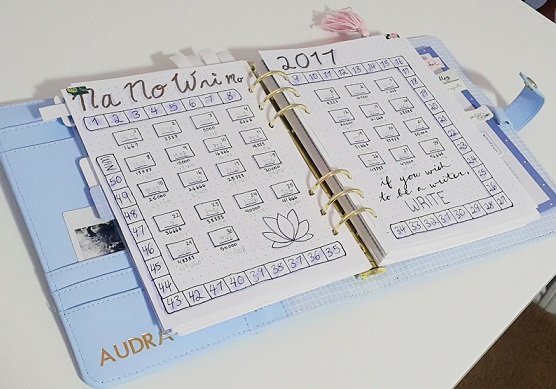
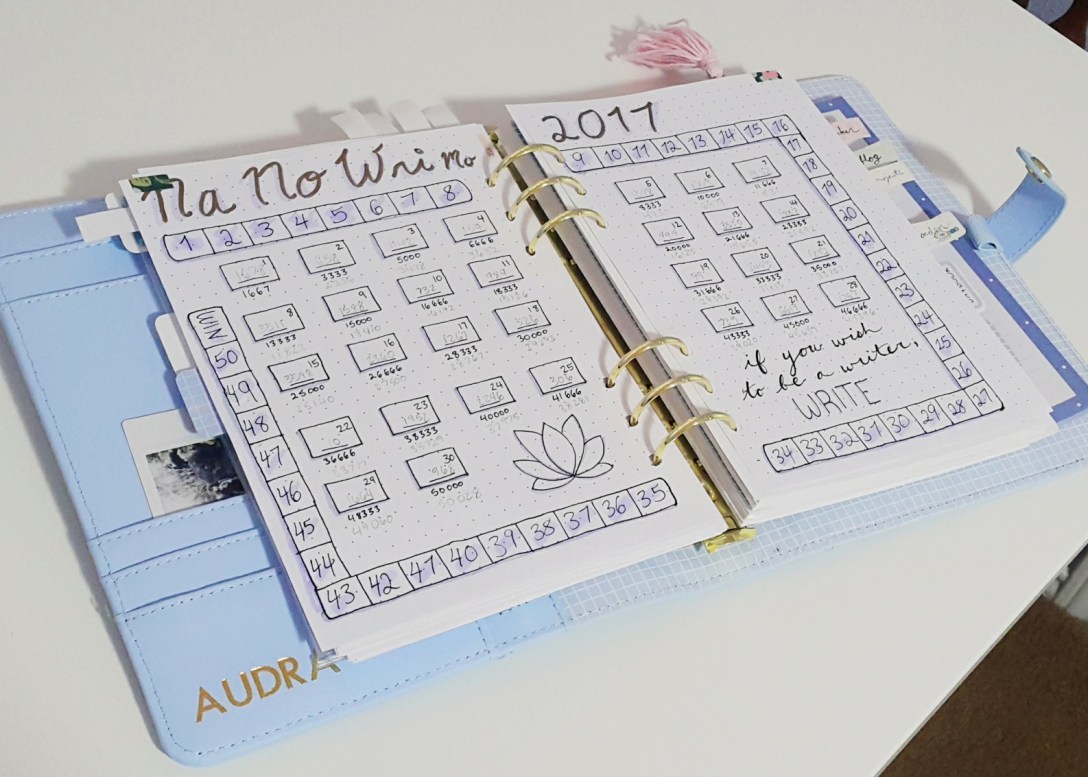
Let’s say you want to write more, which is my major goal for this year. During NaNo, the daily goal must be at least 1667 words or you won’t hit 50k by the end. I’ve done it three years in a row, so I know I can do it. Therefore I thought I must do it every day. I gave myself a little more leeway and went for 1000/day, but after the intensity of November, and the inevitable weeklong writing break I gave myself (which turned into two weeks, then three…) I realized it wasn’t working. 1000 was just too much.

I decided to use his goal of 50 words/day. Because I’m just starting out, I’m counting journaling, blogging, and fiction writing.

So far, I have done it with no problem for about a month, since I arbitrarily decided to start on January 1st (not super arbitrary, and that did happen to be the starting day for the cool habit tracker I printed out, so…).

My first real snag came yesterday. I spent all day out of my house. Sure, I had my small notebook, but I was also feeling crappy and didn’t bother writing in it. I got home around eleven, way past my comfortable bedtime (hello, youngsters), and was so knackered I nearly, nearly gave it up. But I didn’t want to have that blank space in my tracker (I need external accountability to get me to do things, and streaks of check marks help a lot*), so I pulled out my iPad and journaled. I could have spent just about two minutes doing it and written 50 words, but I stayed there for 10 minutes recapping my day, and hey presto, I did my habit. I x-ed off my day. I kept up the streak, and my habit tracker is fat and full and happy.

That’s why it works. No matter what kind of hellish day you’ve had, at the end of it, you can grab your iPad or phone and write 50 words. You can flip over on your bed and do a pushup, you can pull that book over and read 2 pages. That’s the key and the beauty of a mini-habit.

I encourage anyone who’s ever struggled with resolutions or goal-setting or good habit forming to read it and try it out.

Let me know how it goes!
Signature


*See Gretchen Rubin‘s book The Four Tendencies to learn what kind of habit maker you are. It’s a great tie-in to making mini-habits and a fun read too.
a poem: here and elsewhere

When I read or write, I am there and elsewhere.
I am there, sitting or lying, reading or writing.
There in my body, I am.
But I am also elsewhere, and sometimes I don’t recognize myself at all.
I don’t see my hands as part of me. They are ghosts, making words.
The words themselves are more real than the sounds or black shapes that make them.
The flow of energy that words create is the only real force.
The flashes of feelings and images half-formed in my head as I read are more real than the texture of the pages or the tapping of my finger against the screen.
It’s a strange sensation, to be here and elsewhere. To be not entirely in myself.

-a.e

BuildALadder Movement

I was first introduced to the BuildALadder idea by Martina Stawski of EatYourKimchi, a great Youtube channel about life in Korea and Japan. Martina has EDS, an invisible illness that affects her daily.

(WARNING: The following videos are really sad, so if you’re not up for it, I recommend watching them another time.)

Her video confession helped me to write my own confession on Instagram and later here. It’s hard to do.

Mental health issues are invisible. And for those of us dealing with invisible issues, it’s hard to feel justified taking care of ourselves or asking for help.

This second video shows exactly how Martina gets through a really bad day by building rungs on her ladder. It’s a difficult video to watch, but it’s also really encouraging for people who are dealing with depression or pain.

Building a ladder means celebrating small victories. It means being positive when you’re in pain. It means knowing that you can make your life better, even if you don’t get better. It means not waiting to feel good to be happy or do what you want. I don’t have a chronic illness like Martina, but I have struggled my whole life with stress, anxiety, and depression, which have often led to serious health problems, and both in times of pain and in times of good health it’s important to build those ladders.

For me, I like to think of it like a literal ladder, visualizing each rung as I reach for it, grip it, and pull myself up. Each thing I accomplish or notice is a rung to help me up. Sometimes I slip, and I need a booster to get me going again. But I build another ladder.

That’s what the movement is about. It’s hugely important to me, and I love that so many people have embraced it. Check out the articles at the end for other people who have been helped by Martina’s movement.

How I Build My Ladder

  • Note accomplishments; doing my daily habits another day, completing a project, asking for help.
  • Find something beautiful; a flower, something I made, a good meal, a heartfelt laugh.
  • Practice real self-care; invest in my mental health, keep boundaries, know what my body and mind are telling me.

Ladders So Far

  • Got my hair dyed, and it ROCKS.
  • Made a paper dragon mask, and it ROCKS.
  • Started another dragon project because DRAGONS.
  • Started blogging again.
  • Started yoga.
  • Meditation streak 100+ days.
  • Wrote 10 new poems.
  • Got health care.
  • Scheduled my first doctor visit.
  • Went to the library and went to town on books.
  • Bought a yellow teapot for all my loose leaf tea.
  • Organized my office/crafting room for full creative expression.
  • Played with two cats at two friends’ houses.
  • Did a ten-day detox.
  • Played D&D.

Some of these were pretty easy, and some were very hard. There are still days where the thought of leaving the house or seeing people sends me into a downward spiral of anxiety and panic, but doing the little things, even if I do stay at home, helps build the ladder. As Martina said, it helps to shine the light outwards, not in. Don’t focus on the inward awfulness, focus on what’s around you and what you can do. Using my yellow teapot makes me happy because it’s a yellow teapot in my room.

Making paper masks makes me happy because I’m using my hands and creating something awesome.

Each rung, no matter how small, is a small step forward.

For those of you struggling, I hope this will help. I hope we will continue to build ladders.

Signature

Tags on Social Media:

#BuildALadder – Instagram

#BuildALadder – Twitter

Articles About the Movement:

The Vlogging Cure

Literally Darling


a poem: between

(Written a few days before the New Year)

There is some hanging in the air today.
Something amongst the wind in the willow
Something resting between gusts
Something waiting
Coming
A storm
The new year twirling
Green sticks
Waving, flapping,
Too light on this dark day
Overcast, chill,
Willows are not happy trees
They mourn
They sigh
Perpetually complaining
But today something is hanging between the breaths
Of their sighs.
And I am holding my breath
Waiting.

-a.e

Annual Writing Review 2017

This is an assessment of all the writing I did in 2017.

I got this idea from Rachel Geisel, a woman whose blog I love, and whose Writer’s DNA course was fantastic. She got the idea originally from Nicole Gulotta, so it’s a long cycle of paying-it-forward. I love when bloggers do that.

My writing year of 2017 was…interesting, as I’m sure could be said about any writing year. Some things went well, some things did not. I did the whole free download separately, but here’s an overview of my year.

Let’s break it down.

What I Wrote

Creatively: This blog, parts of a fantasy novel, a horror novel, a military/historical novel, many poems (10+), journal (almost every day, hurray!)

Work-related: Lesson plans, PPTs, began template and information for teacher handbook, safety protocols, procedures for; summer camp, filling out forms

Edited: Work procedures, work announcements, work newsletter, memoirs for a friend, creative material for a family member, several posts on Scribophile

What Went Well

Processed with VSCO with  preset

NaNo – I won, third year in a row!

Blogging – I launched it, and wrote several posts I was really proud of. Most of all, I enjoyed it. I love blogging. I’m not in this for the money (of course that would be nice) but I don’t market or advertise or worry too much about that. I just love writing and posting and getting in the community.

Poetry – I’ve started writing, for lack of a better word, poetry. I have no reason to do this, but I wanted to, so I made that my reason. I have an idea to delve into the hows and mechanics of it later, but for now, I’m thoroughly enjoying myself. And joy is what writing is to me. How awesome is that?

Craft Study: I read a bunch of really good books on writing. I’ll make a list sometime in the future, but reading about the craft really helped me. I’ve never believed you can just sit down and write well, but that practice and refining and honing writing is a skill like any other. I also did a brief novel-study session that I’m excited to try again; it involves reading novels you love and analyzing them, first broadly and then scene by scene to get a feel for why the story works (or where it doesn’t). Hello, homework that requires reading? Yes, please.

I found out that I write best in the morning and around seven at night. I used Scrivener almost exclusively for creative work, and it’s been incredible.

What Could Have Gone Better

NaNo – I wrote fifty thousand words, but they weren’t all for one story, or even all in story. I counted my journaling as well since I decided to be a rebel this year. But honestly, the health issues happening meant I couldn’t focus easily, and journaling was therapeutic, so I counted that as slightly more important than focusing on one story. But still, fifty thousand words…

Blogging – It could always be better. I stopped entirely after my health crisis, which is to be expected. And I would like a better “author” blurb and my about page always gives me nightmares, but published is better than perfect, and it’s live and published.

Creative Writing: I left all those novels undone. Some half done, some mostly done, some in their infancy. I didn’t finish another book this past year. I’d like to pick some of them back up, but some of them I realized weren’t the story I was trying to tell, so they’ll be let go.

Community: I didn’t use Scribophile as much as I would have liked. I did a few critiques and received a few that were insanely helpful, but I couldn’t keep it up. I also tried getting a partner, but that petered out after a while as well. I wanted to join a writing circle, but there wasn’t a decent one around my area in Korea. This year, I hope to find a writing circle for real, face-to-face feedback and interaction with other writers. I need feedback and accountability.

Looking Ahead

For 2018, my main writing goals are:

  • Write every day* – blog AND creative
  • Feel good about what I write, even sucky first drafts
  • Join a writing group
  • Get more feedback – via group or some site like Scribophile or Fictionpress
  • Edit a story in full, on paper (didn’t have access to a printer in Korea so this one will be fun!)
  • Finish more stories
  • Write more short stories
  • Write more poetry
  • Read more about the craft

If you’re a writer, I strongly recommend doing Nicole’s Review. It’s been enlightening and uplifting to actually assess my writing year, even the parts that didn’t go as planned.

Happy writing!

Signature

*I’ve set my goal at fifty words a day, a very small number by most standards. Usually, I end up writing anywhere from 500-1000 naturally, but I’ve been doing mini-habits, the technique created by Stephen Guise in his book, Mini-Habits, and this way, on the days when I can barely function, I know I can succeed at my goal by writing just fifty words. Always go for the win.

Read my review for Guise’s latest book, How to Be an Imperfectionist, here.