a poem: epps

On the way to Louisiana, possibly in the town called Epps, there was an old abandoned barn with airplanes inside. Driving by it once or twice a year for a decade will imprint it in your mind. Especially when you have nothing else. This was before smartphones see. So I watched the scenery and made up stories. About myself, leaping along the telephone wires or about that barn and the sad old lonely woman who lived there.

I was about fourteen, I think. Somewhere in those really awkward years between childhood and almost womanhood. For some reason I wanted people to feel sorry for this woman who was old and poor and lived in a barn with old airplanes. I thought people were really mean and would abandon her, and through my story they would be compassionate. It was also some kind of atonement for my own indifference. I too had heard the stories of kids who were young and had created businesses that helped poor people. I had the acquired guilt of being too young to make change on my own and no idea of how to organize any effort outside myself.

I saw my apathy as an indictment, instead of affliction. I still don’t know what it was. That’s why I go to therapy. To rid me of old barns and old women.

-a.e

Flash Fiction Friday: Give Me Time

The son sat on the park bench, watching his father. He was wearing corduroys. No one did that anymore. The father soon returned with his hand behind his back and sat down next to him.

“I wanted to give you something,” he said. “Something I remembered you always liked.”

His son stared at the smudge of coal dust on his father’s neck as his father brought his hand around. It was a cold day in Pennsylvania, too cold for the ice cream his father offered. It was one of those cones with a band of chocolate and peanuts sprinkled on top.

The son stared at it for a long time, trying to decide. His father kept giving him things. He didn’t want things. The father hadn’t understood about aerospace engineering, how it made his heart sing. He did understand about a sweet tooth.

“Thanks Dad,” the son said, staring at the ice cream. It had begun to melt just a bit from his father’s hand. If he drew it out any longer he might as well throw it in his father’s face. He took a bite, right from the top, felt the peanuts like hard kernels, tried to cover them with the cream and swallow them together. Maybe his body wouldn’t notice he’d just poisoned it.

He ate the rest of the ice cream fast, wanting to let his body soak up something other than the peanuts, but he could feel the itchiness beginning, the unease, the nasty feeling of revulsion begin to kick in.

His father sat back and stared up at the sky smiling.

“It’s nice we can talk like this-”

“Dad,” the son choked.


He awoke in the hospital, staring up at the coal smudge on his father’s neck. It didn’t surprise him. He’d seen all the way to the other end of his father’s gesture. This, or refuse his dad. What was worse? His father sat looking at him, eyes red-rimmed.

It wasn’t just an allergic reaction, the doctor told him later. He said a lot of things about GFRs and hemodialysis vs peritoneal dialysis. It all meant he had kidney failure. He needed dialysis until he could get a transplant.

“I’m not a match, son,” his father whispered. “I tried. I wanted to give you one of mine. I wanted to give you…I’m sorry.”

His son shrugged.

His first dialysis was painful. He threw up, but his father was with him. He had to be with him to drive him home, but he stayed through the four hours too. He came back the next time. And the next.

While the machines whirred and did whatever mysterious thing it did to keep him alive, the men began to talk.

The son talked about engineering and the future of the world, and the father talked about the mines and the men. And the son smiled one day at his father. He’d never wanted things. He’d wanted time. And now they had time.

-a.e

Today I Married Myself

I know what you’re thinking. This title is click-bait, up there among the lady who married a bridge and the man who married a box of pizza.

It’s not like that, I swear.

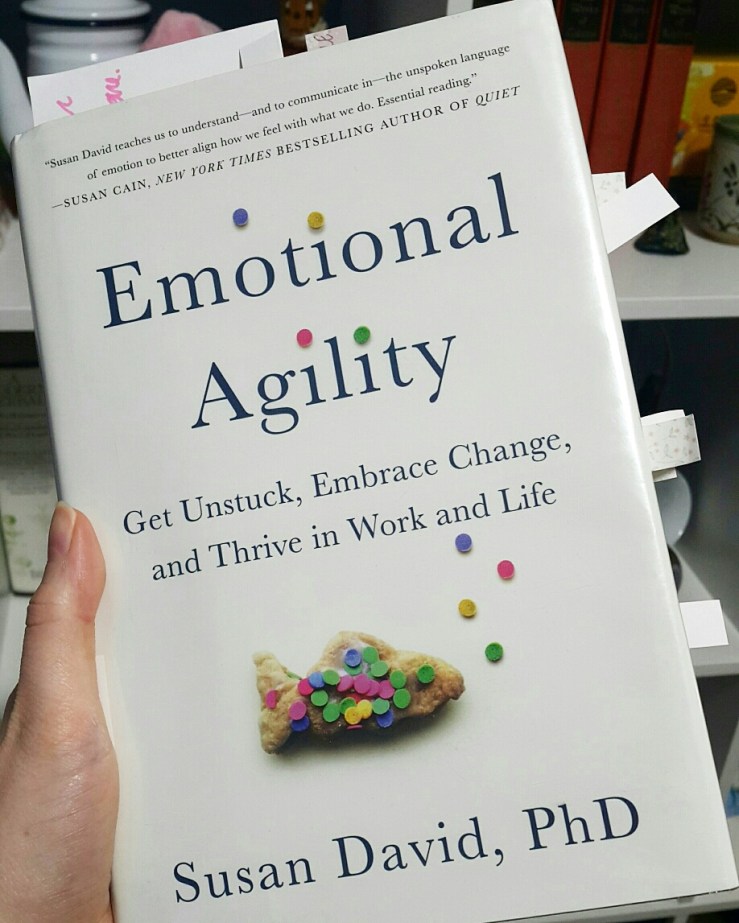
I’ve been reading the book I mentioned in this post, Emotional Agility by Susan David, and it’s…well, it’s one of those books I think should be mandatory reading if you are human.

In the first section, she talks about self-compassion, about accepting yourself for better or for worse. Sounds like marriage vows to me.

I gave it a try. Self, I accept you, body and soul, till death do us part.  Yeah, it was just as stupid and crazy to do as it sounds. I didn’t put on a dress, thank heavens, or play music, although the music might have helped. I just spoke the words to myself, thinking of all the times I’d treated myself like absolute shit, speaking ill right in front of me, blaming me for every failure and setback, and ultimately deciding I was just no good, willing to leave me for another, younger, better version of myself.

Except, unlike marriage, I can’t actually divorce myself. I can only learn to live with me, which, when you take into consideration my annoying eating habits and tendency to leave clothes on the floor, is no mean feat.

I’m trying to make it comical, but it was really quite a turnaround in thinking. Just like in marriage, and in any other relationship, you work at it. You work at being kinder and fighting better and caring for the other even when they’re being a lazy bum and not doing what they promised they would.

Marriage means accepting the other for better or worse, in sickness and health, in productive times and unproductive times, in financial straits or excess. It means you’re committed to being in it for good.

So the same with this notion I had, of, well, not marrying myself, but treating myself better.

Self-compassion, self-care, treat yo’ self – these are all popular buzzwords in society today. But they often take a dangerous form known as enabling. Enabling is typically when a partner, friend or parent allows their loved one to engage in damaging behavior (drugs, alcohol, bad health habits, bad financial habits, seeing bad friends, verbal abuse, etc) and doesn’t call them out on it. The justification is usually that they don’t want to hurt their loved one and don’t want to force them to face the consequences of their actions. Parents continue to give money to grown children who won’t face responsibility. Wives don’t follow through on threats to leave their alcoholic husband. Friends don’t tell each other the person they’re dating is treating them poorly.

This so-called love and compassion is more damaging than helpful, and we often take this stance with ourselves too. We’re so harsh on ourselves normally that we cave in the name of treating ourselves and go to the opposite extreme of trying to let overindulgence, impulsive shopping, or working on something other than our dreams make us feel better about ourselves. In the same way that enabling allows destructive behavior to continue, treating ourselves to cheap and fast rewards leads to less happiness overall.

Instead, as in a good marriage, we need to call ourselves out on bad behavior with compassion and love. We don’t need to rail about how awful we are for failing to work on that project again, or overeating again, or yelling at our kids again. We need to ask why we’re reacting that way, what the deeper issue is, and work to resolve it. We need to have more constructive self-care habits, like meditation, connection with supportive and healthy friends and finding something we value to invest time in.

That’s a good marriage. That’s a good relationship. That’s what I’m trying to do for myself. I’m a pretty nice person. A lot of people have said so. But I’m not nice to myself most of the time. I judge myself by a far higher standard. Most of us do that. We know what we want and what our version of perfect is, and we rarely meet that standard.

The answer is not mindless indulgence after a bout of self-loathing. The answer is healthy communication and honesty with ourselves.

Marry yourself. I recommend it.*

Signature

*THIS IS A JOKE. I took it too far, yes. You get the picture.

Emotional Agility by Susan David: Book Review

IMG_20180223_161559_068

Emotional Agility is a book everyone should read. It’s a book that takes the ideas about mindset and how to live a good life and gently turns them on their heads. You know, mugging me gently of all my faulty ideas.

I did a short summary of the TED Talk by Susan David, the author, but that was just about the Talk. I hadn’t read the book yet. Right after watching the video and writing about it I put the book on hold at the library and waited. It was worth the wait, but I wish I had read this book years ago. Again, required reading from birth.

Overview

If I were to boil the book down to one essential life lesson, it would be this:

Between stimulus and response there is a space. In that space is our power to choose our response. In our response lies our growth and our freedom. – Viktor Frankl

It is in that space that emotional agility lies – in the ability to open up about your feelings; all your feelings.

David gives a lot of ways to do this; that’s what the book is about. She takes us through building emotional agility as opposed to rigidity and uses examples from her own life and her career in psychology.

A lot of this hit home with me. Which is obvious when you see how many markers I put in the book. If I’d owned it, it would have been highlighted until it was more yellow than white.

All Emotions Are Useful

Notice I said “useful,” not “pleasant.” Of course, anger and pain and grief and boredom are not pleasant emotions, but that doesn’t mean they aren’t useful.

David says that emotions are indicators; data. They tell us information about ourselves and our surroundings. You notice you are feeling sad, now ask yourself why. What made you sad, and why did it make you sad?

Rigidity in emotions comes when we use the same old techniques we’ve used all our lives, often from childhood, that served well enough to protect us, but have long since ceased to be useful or even true. David says this is true especially if you’ve been neglected or abused in marriage or in childhood. Thinking people can’t be trusted or you’re going to be hurt was true and possibly helpful in your situation, saving you from immediate pain and danger. But once out of that situation, that thinking, that everyone is going to hurt you, is no longer always true, and no longer serves you best.

I have experienced this. I had a rough first relationship, and ever since, I’ve assumed I’ll be hurt again if I open myself up to intimacy. It’s not true, and it’s not helpful. Sure, I could get hurt, but living while accepting that as my only fate has brought me no joy and lots of anxiety.

David warns though that emotional agility does not mean controlling your thoughts or forcing more positive emotions. “…research also shows that trying to get people to change their thoughts from [negative to positive] usually doesn’t work, and can actually be counterproductive” (David).

That’s where the space between the thought and action comes in.

The Storylines in Your Head

It’s amazing how often I’m hearing about this. I heard it first in my meditation practice, and now again, David talks about the narrative we make of our lives.

We take the vast amounts of information from our environments and coalesce them into something cohesive; This is me, Audra, waking up. (I’m paraphrasing her own narrative.) I am in a bed. I live in Texas. I have to get up today and do yoga because I chose to be healthier. Later I will write a blog post because that’s what I do. I’m a writer. 

David says, “The narratives serve a purpose: We tell ourselves these stories to organize our experiences and keep ourselves sane.” The problem, she goes on to say, is that we get it wrong. We don’t have the whole truth of any situation. We can’t; there’s just too much going on and interconnecting every moment of every day. Stories help us navigate. Those who really go wrong we label psychotic or delusional (or anxious? hello), but in reality, none of us gets it exactly right. We invent our town truth about who we are, in other words.

David called the process of getting invested in our storylines being “hooked.” Getting hooked means getting caught by an emotion or behavior, whether good or bad. We get hooked and play out the storylines that have served us (well or not) in the past. That coworker snubbed me, she must hate me. I’ve never been popular, I must be so unlikeable. No, she’s unlikeable. What a bitch. 

When, in fact, that coworker might not be thinking of you at all, and honest communication could get to the real issue. The point is, being hooked is dangerous.

Fear Walking

One of the greatest things about this book for me, as someone who struggles with anxiety, was David’s idea of courage being fear walking. Courage doesn’t mean the absence of fear. We hear that a lot, in movies and books, but not enough.

We have to lean into our bad emotions, not pull away from them. We need to feel the fear, or the sadness, or the grief, and accept it. Telling a child not to cry when they get their first shot isn’t helpful. Of course they can cry, it’s scary and painful and that’s okay. It’s not okay for them at the moment, and we shouldn’t pretend it is. It will be okay, and they will discover that.

Let your inner child cry when things aren’t okay. That’s okay.

Social Comparison and Self-Acceptance

We all know the comparison game. It’s rife now, maybe more than ever, but even if Instagram and Twitter have made it blow up, it doesn’t really matter. Everyone since forever has been trying to keep up with the Joneses.

David’s advice? Keep your eyes on your own work. That old adage from school (one that I, as an elementary teacher, said a lot) is worth keeping in mind as we grow up. Don’t look at other’s work. Don’t compare it. They are not you. And especially don’t compare with someone way out of your league. A beginning violinist should not compare themselves to Joshua Bell. A beginning track runner should not compare themselves to Usain Bolt.

It’s okay to look just above you, for that goal that is truly a challenge (just above your skill level – or the sweetspot). That can foster healthy drive. But if you have trouble with comparison and perfectionism, keep your eyes on your own work. (I actually wrote this out and stuck it to my wall.)

What the Func?

I touched on this briefly in my review of the TED Talk, but basically, this means asking what the func (function) is of your emotions and thoughts. Emotions are data to be used, not be controlled by.

And it’s important to be specific. What are you stressed about? What is making you feel guilty? What is the reason for the apathy you’re feeling?

One of the best ways to discover and distance yourself from an emotion is to say or think, “I’m noticing that I’m feeling/thinking…” This keeps us as bystanders and observers of ourselves. It’s not helpful to say, “I’m stressed,” because that invokes the idea that you are an emotion, which is not true. You are not stressed. You are feeling stressed. So ask yourself, why? What’s the func?

Another good way to get some distance and some clarity is to identify your values; for it’s often when our values are being stepped on that we feel those negative emotions in the first place. What value might you be sidestepping to make you feel stressed or sad?

Dead People’s Goals

The last idea I want to mention is the idea of trying to live a life free of worry, stress, grief, and pain. David calls that having dead people’s goals, because only dead people are free from those feelings.

To live and to be human is to be sad and happy, to be hurt and feel love, and experience grief and joy. (To everything there is a season.) We must not turn away from the emotions we don’t want, but lean into them and through them and come out stronger.

Don’t have dead people’s goals. Get up, find your courage, and walk in fear. But make sure you walk.
Signature

a poem: my own room 19

My room nineteen is a space in my head. I go there. Or it is my writing practice, which I will not show to anyone. I give only bits and pieces and the dark spirit of the thing is kept hidden, a retreat from the world.
I would like people to

understand me but I will never show them my interior. We dreamers and dark souls appear as angels but

only our demeanor is. Beneath the kindness lies a demon.

I read that story and was afraid.
Afraid I saw myself
Afraid I saw my future
Afraid I saw my children motherless
Afraid I saw my husband widowed
Afraid
Afraid is all I’ve ever been
But comforted when someone writes a story about you across time and space.

1.0 You are (not) alone.

-a.e